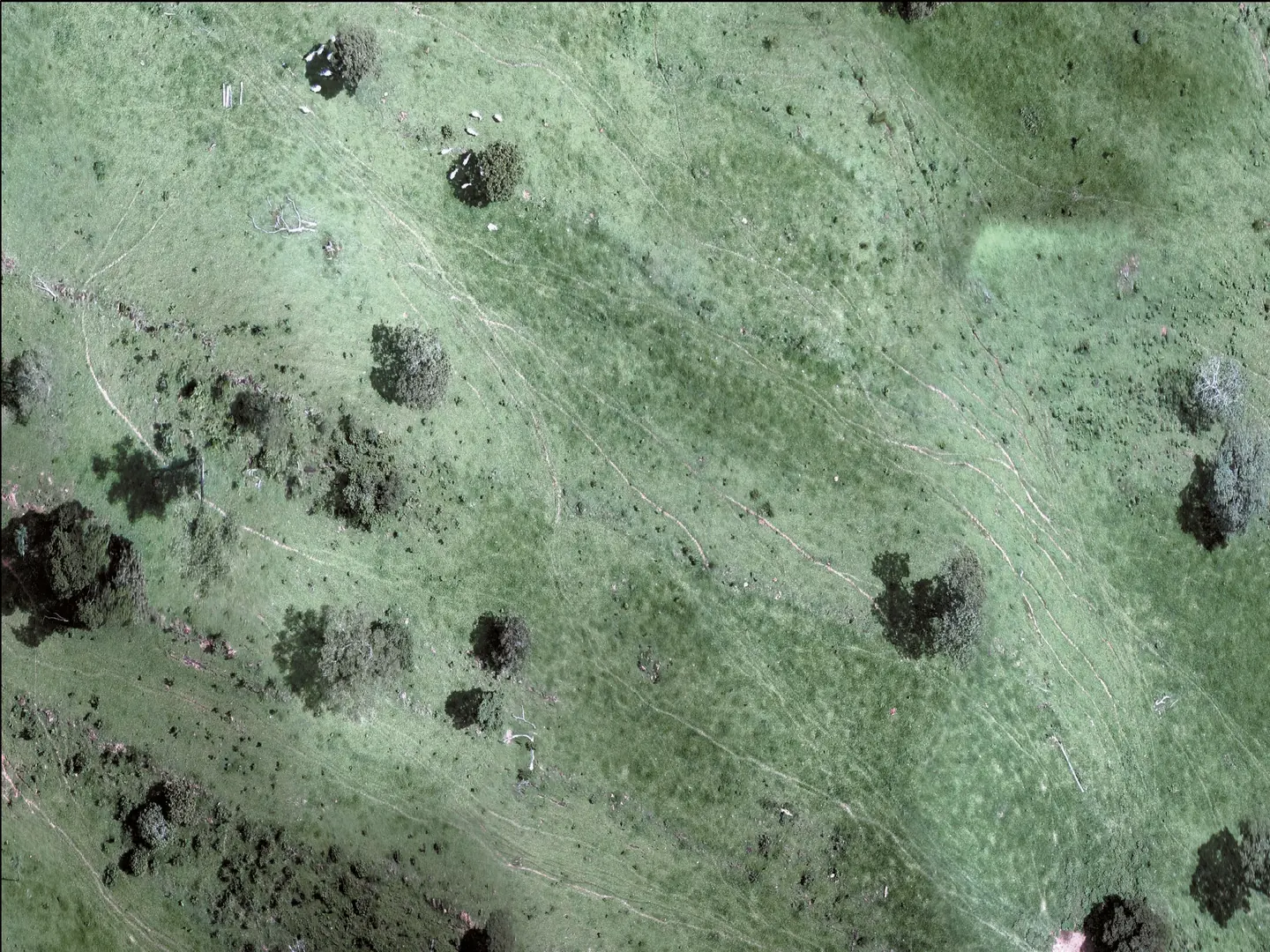
Aerial view of green pastureland

Goiânia · Goiás · Brazil

Time2Graze Project · Internal technical workshop

Time2Graze
Brazil Workshop

An internal workshop for partner teams working on data and decision support for grazing management in the Global South.

14–18 September 2026Goiânia, Goiás · Brazil
View programme
14—18September
2026
ParticipantsWorkshop WhatsApp groupOpens in WhatsApp. Anyone with the link can join.Join the group

Time2Graze project

Time2Graze team directory

We are creating an internal Time2Graze directory to help project partners understand who is involved and each person’s role and expertise. Please provide the information you would like included in the directory.

Add your entry

Ten questions · one entry per e-mail address

Workshop record

Summaries and boards

Daily summaries

  1. Day 1Mon · 14 SepWelcome
  2. Day 2Tue · 15 SepRetreat
  3. Day 3Wed · 16 SepRetreat
  4. Day 4Thu · 17 SepRetreat
  5. Day 5Fri · 18 SepField

Day 2 · Tue · 15 Sep

Workshop boards

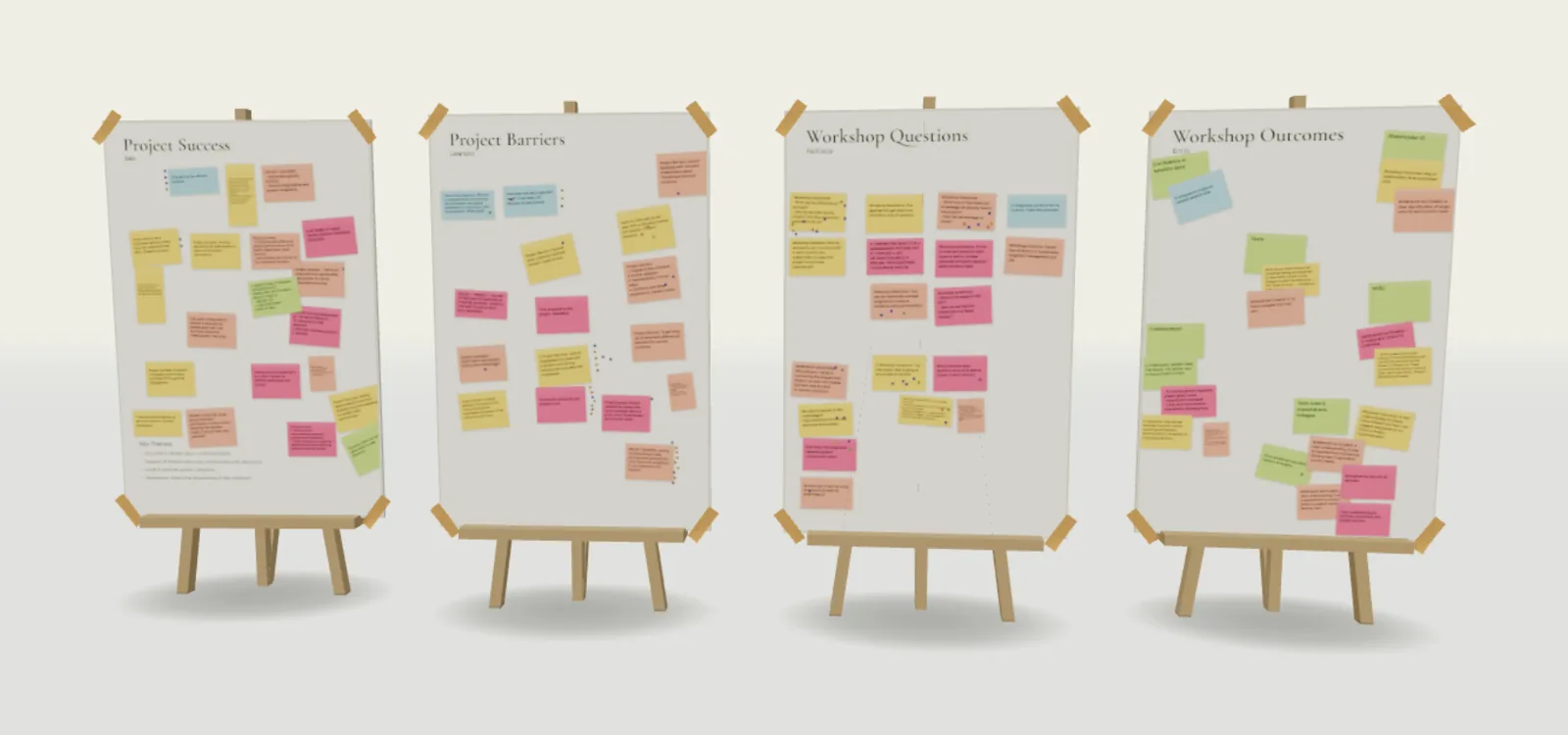
Interactive Session: Priorities, Barriers, and Partner Needs · Lindsey · WRI

  1. Project Success20 contributions · Bea
  2. Project Barriers16 contributions · Leandro
  3. Workshop Questions18 contributions · Nathalia
  4. Workshop Outcomes17 contributions · Emily

Day 4 · Thu · 17 Sep

Collaboration boards

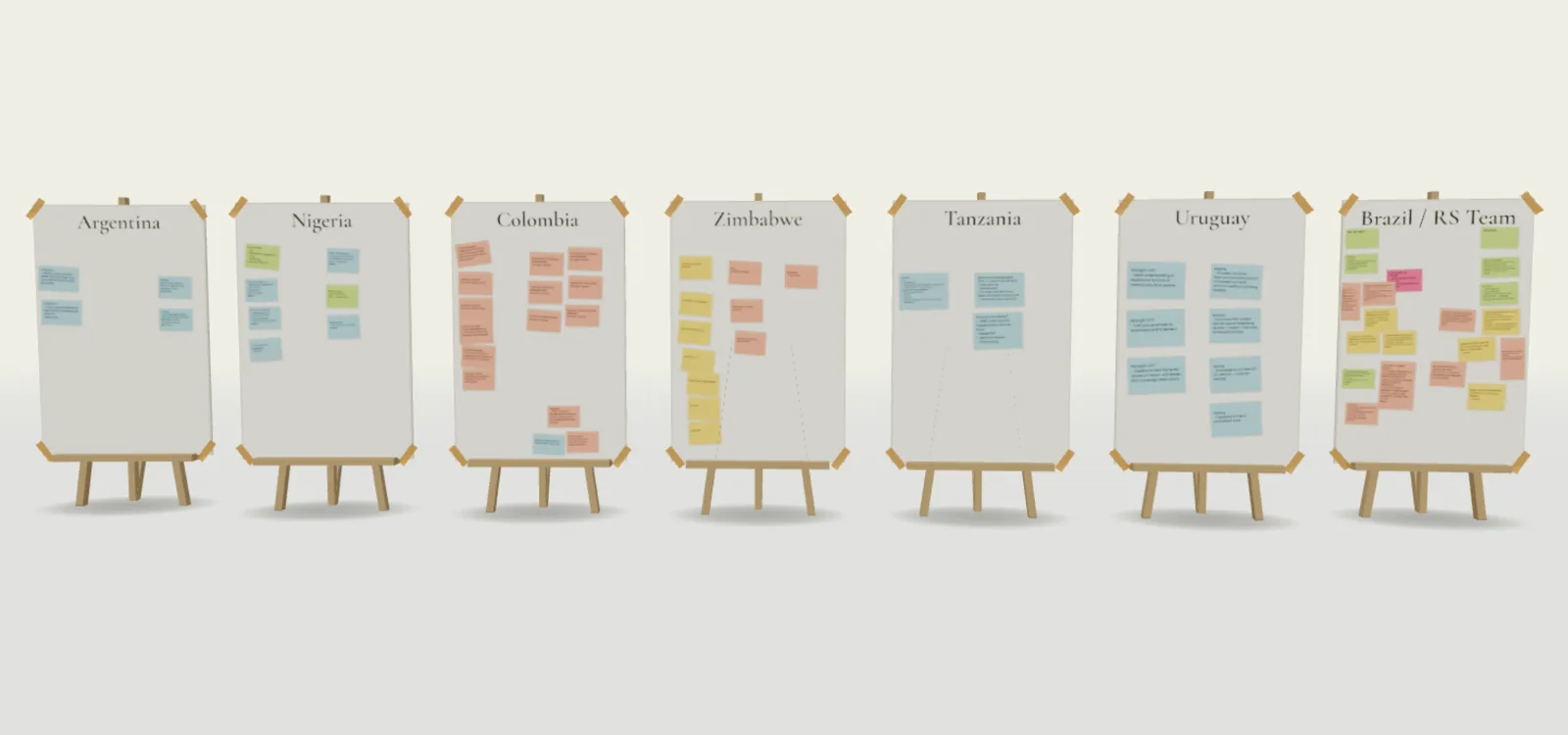
Interactive workshop: Building a collaboration map and country uptake journey · Beatriz · OGH

  1. Argentina4 contributions
  2. Nigeria7 contributions
  3. Colombia15 contributions
  4. Zimbabwe11 contributions
  5. Tanzania3 contributions
  6. Uruguay7 contributions
  7. Brazil / RS Team18 contributions

Workshop overview

Purpose and format

Objective

The primary objective of this workshop is to strengthen collaboration across our partner teams by integrating data development and decision support to advance our main goal of improving grazing management and decision-making in livestock systems in the Global South.

Format
In-person technical workshop
Participation
Internal to the Time2Graze project
Participants
Representatives from each partner country
Host
LAPIG · Federal University of GoiásAbout UFG and LAPIG

Institutions

Institutional affiliations

Time2GrazeLand & Carbon LabOpenGeoHubFederal University of GoiásLAPIGFUNAPE
LAPIG, the host laboratory

InstagramYouTubeLinkedIn

UniversityAbout UFGFive schools became one university. It now keeps observatories — including one pointed at itself.Learn more
University

University

Federal University of Goiás

A university in Goiás that measures things: pasture from orbit, weather over the Cerrado, and its own use of artificial intelligence.

14 December 1960

  1. 01Faculdade de DireitoLaw
  2. 02Faculdade de Farmácia e OdontologiaPharmacy & Dentistry
  3. 03Escola de EngenhariaEngineering
  4. 04Conservatório de MúsicaMusic
  5. 05Faculdade de MedicinaMedicine

joined to createUniversidade Federal de Goiás

A university takes shape

The Federal University of Goiás — Universidade Federal de Goiás, or UFG — was created on 14 December 1960, joining five higher-education schools that already existed in Goiânia. Today its activities include undergraduate and postgraduate education, across campuses in several cities of the state.

The workshop’s host university

LAPIG is part of UFG’s Institute of Socio-Environmental Studies, known as IESA. The workshop takes place at the laboratory on Campus Samambaia in Goiânia.

A university of instruments

The same campus carries a centre forecasting the weather of the Cerrado, a laboratory mapping its pastures, an agrometeorological station recording the climate of Goiânia since 1977, and the first undergraduate degree in artificial intelligence opened in Brazil.

A campus with no gate

Not all of it is on one site. Câmpus Colemar Natal e Silva is spread through Goiânia’s Setor Universitário, around Praça Universitária, four kilometres from where the workshop meets: the Faculty of Law, the Hospital das Clínicas and their neighbours stand among ordinary streets. It is named after the man who directed that faculty, organised the assemblies and marches that argued for a federal university in Goiás, and became UFG’s first rector in 1961.

Beyond the laboratory

UFG also co-organises FICA, the environmental film festival in Cidade de Goiás. The festival brings the university into conversations about cinema, science and the environment.

Instruments

A university that keeps observatories

UFG is easier to describe by what it measures than by how many people it enrols. It keeps instruments pointed at the land, at the sky, and at its own use of artificial intelligence.

  1. Watches the land

    1994

    LAPIG

    Laboratório de Sensoriamento Remoto e Geoprocessamento

    Remote sensing and geoprocessing for environmental and territorial monitoring — including the pastures this workshop is about. It is the laboratory you are sitting in.

    Read about it here
  2. Watches the sky

    2 km

    CEMPA-Cerrado

    Centro de Excelência em Estudos, Monitoramento e Previsões Ambientais do Cerrado

    Numerical weather prediction for Goiás and the Centre-West, down to a two-kilometre grid over the Goiânia region, with climate bulletins, air-quality forecasts and active-fire monitoring.

    Visit
  3. Watches the university

    Daily

    Observatório UFG-IA

    A platform to monitor, collect data on and study artificial intelligence

    A public collection of articles, papers, news and video on artificial intelligence, updated daily, alongside a survey of how the university itself uses the technology. Launched by LAPIG.

    Visit
  4. Builds the instruments

    2019

    CEIA

    Centro de Excelência em Inteligência Artificial

    Created under a public policy of FAPEG, the state research foundation, on a triple-helix model of university, government and companies. UFG opened Brazil’s first undergraduate degree in AI the same year.

    Visit

One university, several places

Five campuses, six cities

The workshop sits on one of them. Friday’s destination town has another, about 119 km away in a straight line — three and a half hours by coach.

Undergraduate courses
114
Students
22,000+
Cities
6
  • Câmpus Samambaia

    Goiânia

    The large campus north-west of the centre, wooded enough that monkeys use the walkways. It holds LAPIG, the Parque Tecnológico Samambaia and an agrometeorological station that has been recording the climate of Goiânia since 1977.

    The workshop runs here
  • Câmpus Colemar Natal e Silva

    Setor Universitário, Goiânia

    The campus inside the city, around Praça Universitária: the Faculty of Law — one of the five schools joined in 1960 — and the Hospital das Clínicas, among others. It carries the name of the man who ran the campaign for the university from that faculty and became its first rector.

    A campus with no gate: it is a set of buildings in an ordinary Goiânia neighbourhood, four kilometres from Samambaia.

  • Câmpus Aparecida de Goiânia

    Aparecida de Goiânia

    Newer, in the neighbouring city; the Faculty of Science and Technology and its palaeontology collection are here.

  • Câmpus Cidade de Goiás

    Cidade de Goiás

    In the former capital, the UNESCO-listed town the programme visits on Friday. The group does not go to the campus — but the university is there.

    Friday’s destination townCampus site
  • Câmpus Cidade Ocidental

    Cidade Ocidental

    On the far side of the state, near the border with the Federal District.
LaboratoryAbout LAPIGThe laboratory hosting the workshop, in its own films and photographs.Learn more
Laboratory

Laboratory

Thirty years of research

At LAPIG, satellite observations and geographic information support the study of changing landscapes.

Laboratory established
1994
Thirty-year anniversary
2024
Research, education and outreach
UFG

People & practice

Inside the laboratory

Research takes place around a table, in shared workspaces and through collaboration. Photographs from LAPIG’s 2024 anniversary retrospective.

Research at UFG

Established in 1994 and linked to IESA, LAPIG works with remote sensing and geoprocessing. It produces and organises geographic information for environmental and territorial monitoring.

Pastures as a research focus

The laboratory studies pasture condition and productivity through mapping and monitoring. Its Pasture Research Programme provides the Atlas of Pastures and contributes to pasture mapping within MapBiomas.

From research to accessible data

The Atlas of Pastures makes geospatial information about Brazilian pastures available online. The laboratory’s research pages introduce its projects and the data products they produce.

Explore the work

From observation to shared knowledge

Research supportAbout FUNAPEThe work behind a research project — and the building it is done in, on this campus.Learn more
Research support

Research support

Supporting research projects

A grant is not a laboratory. Somebody has to contract, purchase, account for and report it — and at UFG that somebody has a building in the science park.

FUNAPE — Fundação de Apoio à Pesquisa

Created by researchers

FUNAPE — Fundação de Apoio à Pesquisa — is a private, nonprofit foundation created in 1981 by a group of researchers at UFG. It is accredited by the ministries of education and of science and technology, its projects are approved by a deliberative council, and its accounts are open to the federal audit bodies of every institution it serves.

The work behind a project

The foundation supports the securing and management of resources for teaching, research, university outreach, innovation and institutional development: the contracting, purchasing and accounting that a research team would otherwise be doing instead of research.

Beyond this university

FUNAPE administers projects for around nine universities and federal institutes. Alongside UFG, its own account names the federal institutes of Goiás and Goiano, the University of Brasília, the State University of Goiás and EMBRAPA.

A building of its own

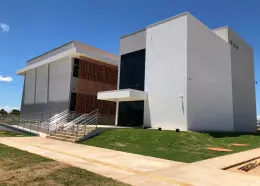
Its headquarters opened in December 2020 inside the Parque Tecnológico Samambaia, next to the regional centre for technological development: 1,772 m² over two floors, with a training and events room for 97 people, a roof garden, a system that recycles water for cleaning and irrigation, and the wiring already in place for solar panels.

Generally, how the support works

  1. 01A project is approved

    Research, teaching, outreach and innovation projects begin inside the university.

  2. 02Resources are secured

    The foundation supports obtaining the funding a project needs to run.

  3. 03The work is administered

    Contracts, purchasing and accounting are handled so the research team can do research.

  4. 04The project reports

    Governance and compliance requirements are met and published.

Parque Tecnológico Samambaia · 179,000 m²

The foundation has neighbours

FUNAPE is not an office somewhere else. It has a building on the campus where this workshop runs, inside UFG’s science park — discussed from 2004, built out from 2011 — among the laboratories and centres whose projects it administers.

  1. 01FUNAPE

    Its own building since December 2020: 1,772 m² over two floors, a roof garden, water recycling, and a training room for 97 people.

  2. 02LaMCAD

    The multi-user high-performance computing laboratory, opened in 2020. CEMPA-Cerrado — which forecasts the weather of the Cerrado — is its largest client.

  3. 03CRTI

    The Regional Centre for Technological Development and Innovation, next door to FUNAPE.

  4. 04Agência UFG de Inovação

    The university’s innovation agency.

  5. 05CEMEP

    The Centre of Excellence in Molecular Studies, Energy and Petroleum.

  6. 06IPElab

    An open prototyping laboratory.

  7. 07CEI

    The Entrepreneurship and Incubation Centre, with coworking space, startups and spin-offs.

  8. 08Edifício LIFE

    One of the park’s laboratory buildings.

Parque Tecnológico Samambaia
Foundation established
1981
Its building, from 2020
1,772 m²
Institutions supported
9